Dental implants vs dentures: which is right for you?
If you’re weighing dental implants vs dentures, you’re not alone. Losing teeth affects how you chew, how your face looks, and how confident you feel speaking or smiling. This guide compares the two options on cost, comfort, longevity, maintenance, and clinical outcomes so you can ask the right questions at your next dental appointment.
Quick comparison at a glance
Review this snapshot before diving into details.
| Feature | Dental Implants | Dentures |
|---|---|---|
| Stability & function | High — fixed to jawbone, close to natural teeth | Variable — removable; stability can decline over time |
| Bone preservation | Yes — implants stimulate bone and slow resorption | No — dentures do not prevent jawbone loss |
| Longevity | 15+ years to lifetime with good care | 5–10 years for fit; relining/replacement needed |
| Typical upfront cost (U.S.) | $3,000–$6,000 per tooth; full-arch implant-supported prosthesis $20,000+ | $600–$8,000 (partial to premium full dentures for both arches) |
| Maintenance | Routine brushing/flossing; periodic professional care | Daily removal for cleaning; adhesives and relines common |
| Suitability | Requires adequate bone or grafting; medically acceptable candidates | Broadly suitable; immediate replacement option after extractions |
What makes implants different?
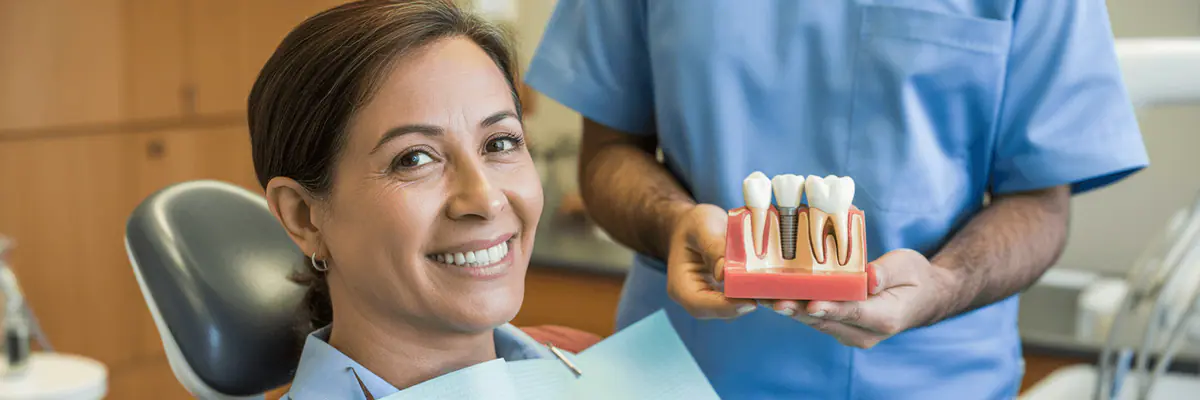
Dental implants are titanium posts surgically placed in the jaw to anchor crowns, bridges, or full-arch prostheses. That direct connection to bone gives mechanical stability and a biologic advantage: the implant transfers chewing forces into bone, which helps preserve jaw volume and facial structure.
Pros of dental implants
- Higher chewing efficiency: Implants restore biting force close to natural teeth, improving your ability to eat a varied diet.
- Bone preservation: By transmitting force into bone, implants slow the jawbone resorption that causes the sunken look people sometimes associate with tooth loss.
- Longevity and predictability: With good oral hygiene and routine dental care, implants can last decades. Crowns and prosthetics may require periodic replacement, but the implant fixture is long-lasting.
- Patient satisfaction: Studies show higher satisfaction scores for implants compared with removable dentures, especially for comfort and function.
Cons of dental implants
- Higher upfront cost: The surgical and laboratory components increase initial expense compared with dentures.
- Surgical procedure: Placement requires minor surgery, local anesthesia, and a healing period. Some patients need bone grafting, which extends timelines and cost.
- Medical considerations: Conditions such as uncontrolled diabetes, heavy smoking, or recent head/neck radiation can increase complications and affect candidacy.
- Time to final restoration: While immediate or early loading options exist, many cases require months of healing between stages.
What makes dentures different?
Removable dentures replace missing teeth with prosthetic teeth attached to a base that rests on the gums. Options range from partial dentures that clip onto remaining teeth to complete dentures that replace an entire arch.
Pros of dentures
- Lower initial cost: Dentures are typically less expensive to fabricate than implant-supported restorations.
- Quick restoration: You can often be fitted with immediate dentures soon after extractions, restoring appearance and basic function.
- Non-surgical: Traditional dentures do not require surgery, which appeals to medically complex patients.
- Customizable esthetics: Modern materials and skilled technicians produce natural-looking results at many price points.
Cons of dentures
- Reduced chewing efficiency: Removable bases offer less stability than fixed teeth, making hard or sticky foods challenging.
- Progressive bone loss: Dentures sit atop the jaw ridge; they do not stimulate bone, so the bone beneath shrinks over time, altering fit and facial contours.
- Ongoing maintenance: Adhesives, daily cleaning, relines, and eventual replacement add recurring costs and effort.
- Fit and comfort issues: Soreness, sores, and slipping are common—especially in the lower arch where stability is harder to achieve.
Types of implant and denture solutions
Not all implants or dentures are the same. Matching the technique to your needs changes cost, recovery, and results.
- Single-tooth implants: Replace a single missing tooth with a post and crown, ideal when neighboring teeth are healthy.
- Implant-supported bridge: Uses two or more implants to support a multi-tooth prosthesis — a conservative option compared with replacing each tooth with an implant.
- All-on-4 / fixed full-arch: Uses four or more strategically placed implants to support a permanent bridge replacing all teeth in an arch. Often faster and lower-cost than replacing each tooth with individual implants.
- Implant-retained overdentures: A removable denture that snaps onto implants for improved stability — a common compromise between stability and cost.
- Immediate dentures: Fabricated before or at the time of extraction so the patient is never without teeth; they generally require relining once healing occurs.
Cost comparison: realistic price ranges and what affects price
Costs depend on geography, clinician experience, materials, the number of implants, and preparatory work like bone grafts. Below are typical U.S. price ranges to set expectations.
| Treatment | Typical U.S. price range | Notes |
|---|---|---|
| Single-tooth implant (fixture + crown) | $3,000–$6,000 | Includes implant, abutment, and crown; grafting increases cost |
| Implant-supported bridge | $6,000–$30,000+ | Price rises with the number of implants and prosthesis complexity |
| Full-arch fixed (All-on-4) | $15,000–$50,000 per arch | Financing plans often available; lab fees and surgical costs included vary |
| Complete dentures (both arches) | $600–$8,000 | From basic acrylic to premium handcrafted prostheses |
| Implant-retained overdenture (2–4 implants) | $7,000–$25,000 per arch | Balances improved stability with lower implant count |
Insurance coverage for implants varies widely; many plans cover a portion of denture costs but treat implants as elective. Ask your provider for an itemized estimate and check financing options your dental office offers.
Clinical outcomes and statistics
Systematic reviews report implant survival rates commonly between 90% and 98% over 10 years, depending on prosthesis type and patient factors. Denture satisfaction is high for appearance but lower for chewing efficiency and comfort compared with implants. For evidence-backed reading, see a long-term outcomes review at the National Library of Medicine: Long-term outcomes of dental implants.
Public health sources like the CDC track tooth loss trends and preventive measures that reduce the need for full replacements; these resources help patients understand population-level context.
Who is a good candidate for implants?
Implants suit many patients missing teeth, but candidacy depends on several factors:
- Bone volume: Enough jawbone is required. If bone is insufficient, grafting or sinus lifts can create support for implants.
- Medical history: Uncontrolled diabetes, heavy smoking, bisphosphonate therapy, or recent radiation to the head/neck increases risk. Your dentist will review your whole health picture.
- Oral hygiene commitment: Implants need meticulous home care and regular professional visits to prevent peri-implant disease.
- Budget and timeline: You should be comfortable with higher upfront costs and a multi-stage treatment process in many cases.
If you have gum disease, treating it before implant placement improves outcomes. For information on gum health before restorative work, read about scaling vs root planing and why periodontal health matters.
Maintenance: what to expect long term
Implants require daily brushing, interdental cleaning, and periodic professional exams. Dentures require daily removal, soaking, and brushing of the prosthesis; relines and repairs become necessary as the mouth changes. Both options benefit from regular dental follow-up to catch issues early.
A specific risk for implants is peri-implantitis — an inflammatory bone loss around the implant. Early detection through routine checkups reduces the need for complex treatments.
How to decide: practical questions to ask your dentist
- Am I a candidate for implants based on my medical and dental history?
- Do I need bone grafting or sinus lift procedures?
- What is the total expected cost, including follow-ups and potential complications?
- Can I see before-and-after photos of similar cases?
- What maintenance will be required at home and in-office?
Bring these questions to your consult and ask for a written treatment timeline. If you want a local practice overview and what to expect at your first visit, see our practice page: Why Choose Valencia Smile.
Side-by-side comparison: key metrics and stats
| Metric | Dental Implants | Dentures |
|---|---|---|
| 10-year survival or success | 90%–98% (implants/fixtures) | Variable — functional fit often declines by 5–10 years |
| Average chewing force restored | 70%–90% of natural dentition | 10%–40% of natural dentition |
| Typical lifespan before major replacement | Implant fixture: 15+ years; prosthetic crowns 10–20 years | 5–10 years for relines/replacements |
| Bone preservation effect | Yes — preserves bone volume | No — contributes to progressive ridge resorption |
Which option suits which patient?
- Single missing tooth in a healthy adult: A single-tooth implant often gives the best long-term function and preserves adjacent teeth.
- Several adjacent missing teeth: An implant-supported bridge can avoid preparing healthy teeth for a conventional bridge.
- Edentulous older adult with limited budget: Well-made dentures offer immediate improvement in appearance and function without surgery.
- Patient seeking strong permanent solution: All-on-4 or full-arch fixed options provide fixed teeth and can be more cost-effective than multiple individual implants for full-mouth replacement.
Frequently Asked Questions
How much do dental implants cost compared to dentures?
Implants have higher initial costs — a single implant commonly ranges $3,000–$6,000, while traditional dentures range from several hundred to a few thousand dollars. Factor in long-term maintenance and replacement when assessing total lifetime cost.
How long do implants last versus dentures?
Implant fixtures can last decades with proper care; crowns may need replacement after 10–20 years. Dentures usually need relining or replacement every 5–10 years as jaw shape changes and wear occurs.
Can I get implants if I’ve worn dentures for years?
Often yes. Long-term denture wearers may have bone loss, but bone grafting and modern implant strategies like All-on-4 or zygomatic implants can enable implant-supported restorations. A CBCT scan determines feasibility.
Do dental implants hurt?
Implant placement involves surgical steps and does cause temporary discomfort, managed with local anesthesia and pain meds. Most patients report less long-term bother than with failing teeth or unstable dentures.
Will my insurance cover implants?
Coverage varies; many dental plans limit implant coverage or treat them as elective. Verify benefits before treatment and ask about in-office financing or third-party plans.
What are implant-retained dentures and are they worth it?
Implant-retained overdentures snap onto implant attachments for stability while remaining removable. They drastically improve function over conventional dentures and are often a practical compromise between cost and stability.
Conclusion
Choosing between dental implants vs dentures depends on health, budget, timeline, and desired function. Implants deliver superior stability, bone preservation, and long-term value for many patients. Dentures offer quicker, lower-cost restoration and remain an excellent choice for many circumstances. Discuss your medical history, oral health, and financial options with your dentist to choose the right path.
If you’d like help comparing options for your mouth specifically, schedule a consultation — we’ll review your imaging, outline costs, and recommend a clear treatment plan tailored to your goals.
References: