What to eat after tooth extraction: safe, nutritious choices that speed recovery
If you just had a tooth removed, one of your top questions is likely what to eat after tooth extraction. Your first 24 to 72 hours guide healing and lowers the chance of complications such as dry socket. For step-by-step aftercare and surgical details, see our tooth extraction and oral surgery service page which explains the clinical side and how we plan recovery for each patient.
Why food choices matter in the first 2 weeks
The socket must clot, the soft tissue must close, and the local immune response needs proper nutrition. Eating the wrong textures, using straws, or aggressive rinsing too early can dislodge the clot and raise the risk of dry socket. The American Association of Oral and Maxillofacial Surgeons reports dry socket rates around 2 to 5 percent for routine extractions and higher for impacted third molars; careful diet and behavior in the first 72 hours make a measurable difference (AAOMS).
Practical timeline: what to eat and when
Below is a concise timeline you can follow. These stages reflect common guidance from oral surgery sources such as the Mayo Clinic and NHS, and match the most frequent questions patients ask in community forums.
| Time after extraction | What to eat | What to avoid |
|---|---|---|
| First 0–24 hours | Room-temperature liquids, clear broths, apple juice, electrolyte drinks, plain yogurt, protein shakes | Hot drinks, carbonated beverages, alcohol, crunchy or chewy foods, straws |
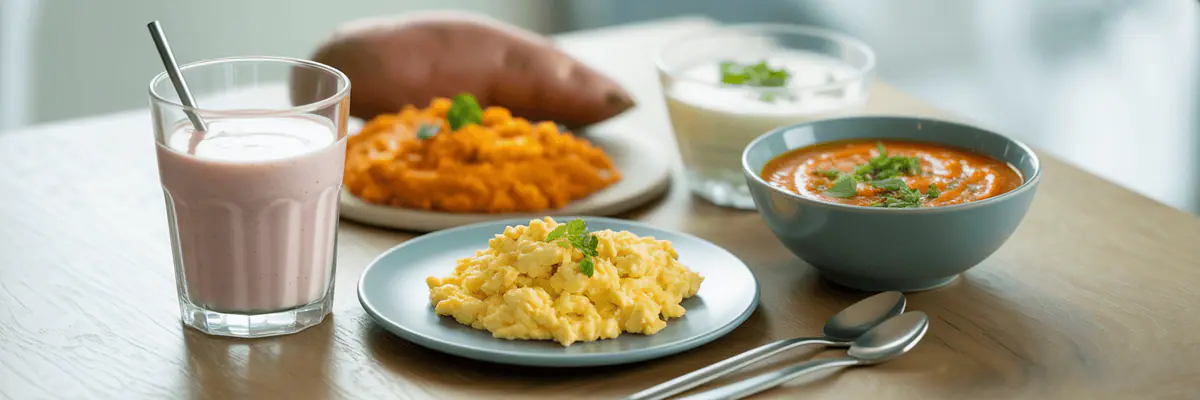
| 24–72 hours | Blended soups, mashed potatoes, smoothies (no straw), applesauce, soft scrambled eggs | Chewing at extraction site, hard crusts, nuts, chips, seeds |
| 3–7 days | Soft pasta, soft fish, soft cooked vegetables, cottage cheese, milk-based puddings | Sticky candy, chewing gum, corn kernels, whole seeds |
| 1–2 weeks | Gradually reintroduce firmer foods as comfort allows; continue avoiding chewing on the surgical side until cleared | Return to full chewing only after your dentist confirms healing |
What to eat right now: 20 safe food ideas
Focus on calories, protein, and vitamins to support healing. Here are practical options you can buy or make at home.
- Smooth protein shakes made with milk or plant milk and added protein powder
- Greek yogurt or plain yogurt (no fruit chunks)
- Avocado mashed with a fork
- Mashed potatoes or sweet potatoes
- Pureed vegetable soups and strained broths
- Scrambled or soft-boiled eggs
- Silken tofu blended with soy sauce for flavor
- Oatmeal cooked until very soft
- Cottage cheese
- Applesauce and pear purée
- Hummus eaten with a spoon
- Protein pudding
- Well-cooked, flaked fish like salmon
- Soft polenta
- Refried beans (smooth)
- Well-cooked, smashed bananas
- Bone broth or enriched soups for calories and collagen
- Soft tofu-based smoothies for extra protein
- Mashed lentils with olive oil for added calories
- Gelatin desserts or chilled puddings for hydration and calories
Quick comparison: soft liquids versus soft solids
| Category | Pros | Cons | When to prefer |
|---|---|---|---|
| Soft liquids (smoothies, broths) | Easy to swallow, gentle on socket, good hydration | May be lower in chewing-related calorie burn; watch sugar in commercial smoothies | First 48 hours, patients with limited jaw opening |
| Soft solids (mashed potatoes, soft fish) | More satisfying, typically higher in protein and calories | Requires gentle chewing; risk if you accidentally bite the side | Days 2–7 as swelling decreases and you can tolerate more texture |
Nutrition tips that speed healing
Protein and micronutrients matter. Aim for a protein source at each meal and include vitamin C rich foods when possible. If chewing is impossible, a 20–30 gram whey or plant-protein shake twice daily supports tissue repair. For authoritative guidance on healing and wound care, see the Mayo Clinic postoperative recommendations (Mayo Clinic).
Local tips from community stories that matter
Reddit and other patient forums reveal useful real-world warnings we do not want to ignore. For example, one patient reported having three lower molars extracted with bone grafting and living on soft, low-fiber foods while taking antibiotics and ibuprofen; they experienced constant indigestion and weight loss and were advised to add nutrient-dense smoothies and small, frequent meals to restore calories. Another user posted five days after a wisdom tooth extraction asking whether bread or mac and cheese were safe; this underscores how common the question is and why concrete timelines are helpful. A third patient described noticing pus and a blackened socket at day 10 and was rightly alarmed about infection. These stories show why specific, staged dietary guidance and prompt communication with your surgeon matter.
Foods to avoid and why
Avoid anything that can mechanically or chemically disturb the clot or introduce trapped food particles into the socket. That list includes:
- Hard, crunchy foods such as chips, nuts, and raw carrots
- Small seeded foods like sesame seeds or popcorn which can lodge in the socket
- Carbonated drinks and alcohol in the first 72 hours because they affect clot stability
- Hot beverages during the first 24 hours because heat can increase bleeding
- Using a straw because suction can dislodge the clot and cause dry socket
Avoiding dry socket: specific behaviors
Dislodging the clot causes severe pain and delays healing. Practical behaviors that reduce risk include avoiding spitting and vigorous rinsing for the first 24 hours, sleeping with your head elevated the first night, and using gentle salt-water rinses starting 24 hours post-op unless your surgeon advises otherwise. If symptoms worsen after 48 to 72 hours instead of improving, contact your dentist or oral surgeon immediately; worsening pain is a common sign reported in community threads where patients sought urgent help.
How to keep calories up without chewing
If you cannot tolerate solids, choose nutrient-dense liquids and semi-liquids. Examples that add calories and protein without chewing:
- Full-fat yogurt blended with protein powder
- Milkshakes or smoothies made with nut butter, oats, banana, and whey or plant protein
- High-calorie broths enriched with cream or powdered milk
- Creamy soups puréed until smooth with added beans or lentils
When to call your dentist: red flags from patient reports
Most post-extraction pain improves day by day. Call your dental team if you notice any of the following:
- Increasing or severe pain after 48–72 hours, especially if it radiates to the ear
- Foul taste or pus in the socket, or visible black material that does not clear with gentle rinsing
- Fever, uncontrolled bleeding, or difficulty breathing
- Marked swelling that worsens after the first 72 hours
These signs were echoed by several people sharing their experiences online and represent the most common early complications.
Food and medications: what interacts with healing
Nonsteroidal anti-inflammatory drugs such as ibuprofen are often recommended for pain and swelling control, but they can cause stomach upset in some patients who live on a liquid diet. If you are taking antibiotics, pair them with foods or supplements your surgeon permits to reduce gastrointestinal side effects. If nausea or indigestion prevents you from eating enough, call your provider for specific alternatives; some patients benefited from anti-nausea medication or shifting to more bland, calorie-dense liquids for a few days.
Local tips from our practice
At our office we counsel patients to keep a small emergency kit at home with recommended soft food recipes, a blender or stick blender, and a list of high-protein liquid options. For patients heading into implant stages we point them to our related resources such as our best foods after dental implant surgery page and our recovery guide about implant recovery when the plan includes staged extractions and grafting. Planning meals ahead reduces stress and improves healing outcomes.
Frequently Asked Questions
When can I start rinsing with salt water after a tooth extraction?
Gentle salt-water rinses are usually safe 24 hours after extraction. Use a warm salt solution and rinse gently, avoid forceful swishing, and do not spit hard. If your surgeon advised a different timeline because of grafting or complex surgery, follow their instructions. Many patients ask this exact question on forums, which is why we recommend 24 hours as the general rule.
Is bread safe a few days after extraction?
Soft, moist bread can be eaten cautiously around day 3 if you can chew away from the surgical side. Avoid crusty rolls and sticky sweet breads that can lodge in the socket. If you have bone grafting or sutures near the site, wait until your surgeon clears you. When in doubt, mash the bread with soup or make a soft sandwich you do not need to bite into.
How soon can I eat protein-rich foods?
You can get protein from liquids immediately: protein shakes, Greek yogurt, and puréed beans. Soft solid proteins like scrambled eggs or flaked fish are usually okay by day 2 or 3. Prioritize protein early, because it supports tissue repair and reduces the risk of muscle loss during limited eating.
What if I notice pus or bad smell from the socket?
Pus or a persistent bad smell can indicate infection. This requires prompt evaluation. Some patients described this occurring around day 10 and sought urgent care. Your dentist may examine the site, possibly prescribe antibiotics, and clean the socket if needed. Do not assume it will resolve on its own if you have systemic symptoms or increasing pain.
Can I use a straw for smoothies once swelling goes down?
Avoid straws for at least 7 days to protect the clot. Some surgeons recommend avoiding straws for two weeks after complex extractions. Sipping from a glass or using a spoon is safer and reduces dry socket risk.
How do I avoid constipation while taking pain meds and eating soft foods?
Use stool softeners if prescribed and include fiber where possible, such as blended prunes or pureed beans, plus plenty of fluids. Many patients on opioid pain meds experience constipation; discuss preventive measures with your prescribing clinician to avoid added discomfort during recovery.
When can I return to normal diet?
Most patients are comfortable returning to a normal diet by two weeks, but full bone healing takes longer. If you had bone grafting or more extensive surgery, healing can be slower and your surgeon will advise when it is safe to resume full chewing. Progress should be gradual and guided by comfort and clinical checks.
Are there recipes for easy, nutrient-dense soft meals?
Yes. Try a blended lentil soup with olive oil and soft herbs, a smoothie with protein powder and nut butter, or mashed sweet potato with Greek yogurt and honey. We provide recipe handouts in our postoperative packet and can email them on request.
Conclusion
Choosing the right foods after a removal matters as much as the surgery itself. Follow staged guidelines, keep protein and calories up with smoothies and soft foods, avoid suction and crunchy particles, and call your dental team for red flags such as increasing pain, pus, or fever. If you are searching specifically for what to eat after tooth extraction, start with liquids and smooth purees, add soft protein-rich solids by day 3, and return to normal chewing only when your clinician confirms healing. For tailored advice and follow-up, visit our tooth extraction service page or call our office. We coordinate nutrition and recovery plans so you heal faster and eat with confidence.